The hidden chemistry of soft-plastic toys: from "squishies" to slime
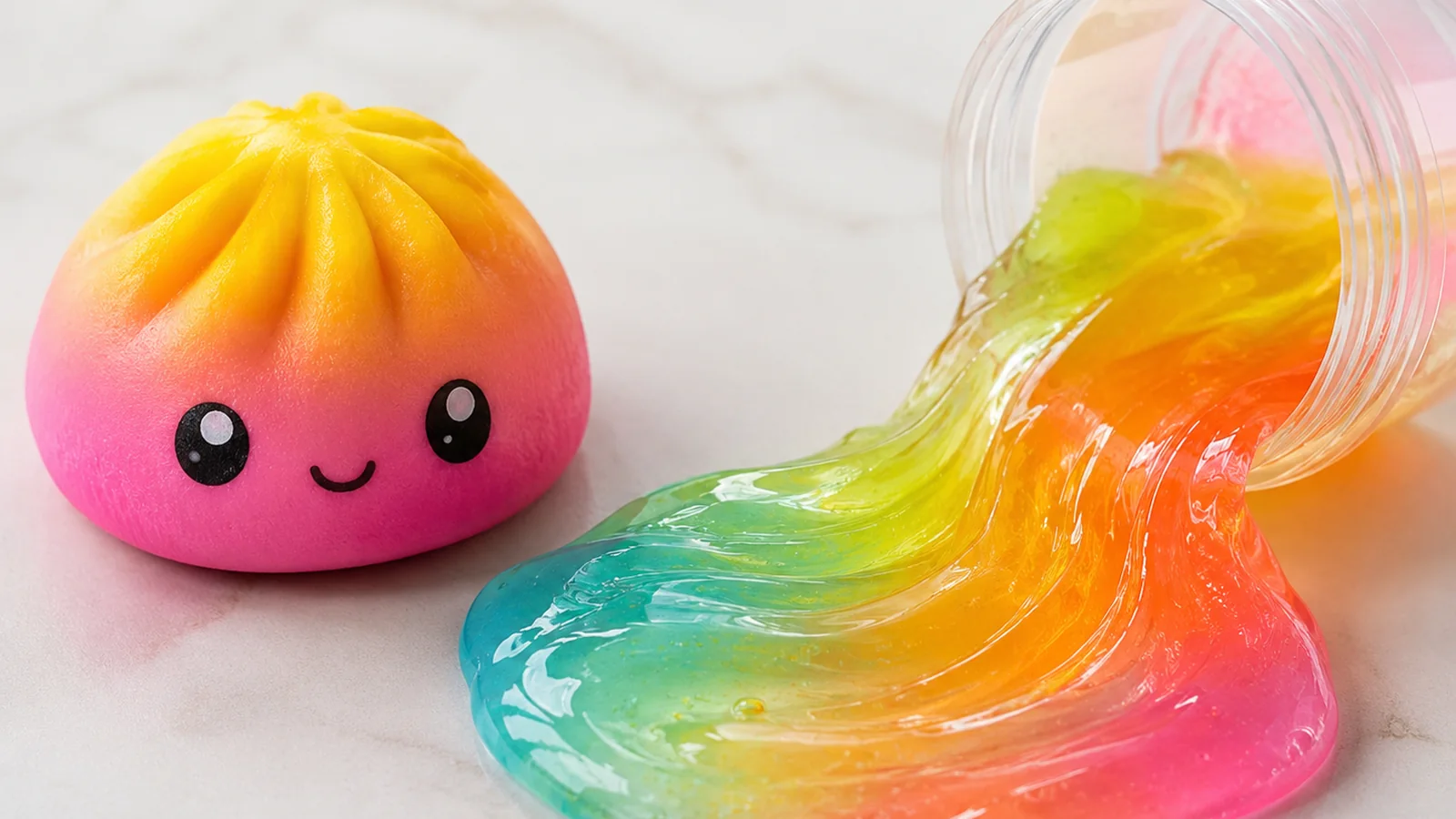
The one-line takeaway for parents
UK Trading Standards recently urged parents to bin a counterfeit "squishy" toy — it gave off a strong chemical smell and tested positive for volatile organic compounds (VOCs) including styrene and xylenes, which can cause headaches, nausea, and skin and breathing irritation, plus a choking risk from small parts.1
This isn't a one-off. Back in 2019, Hong Kong's Consumer Council found 7 in 10 slimes over the boron migration limit (worst >12×), a reproductive-health concern.2 The chemicals differ — squishies are mainly about VOCs, slime mainly boron and preservatives — but it's the same pattern: cheap, brightly-coloured soft novelty toys can hide chemical risks you can't see and can't reliably smell-test.
What was the UK warning?
Trading Standards teams at Swansea and Glasgow councils warned that counterfeit "squishy dumpling" toys were releasing several VOCs — including styrene, ethylbenzene and xylenes. These toys often reek of chemicals/plastic straight out of the packet; short-term exposure can cause headaches, nausea, and skin and airway irritation, and because they're counterfeit and small there's also a choking risk.1
What are VOCs, and why are they in soft-plastic toys?
VOCs (volatile organic compounds) are chemicals that evaporate — and smell — at room temperature. In cheap soft-plastic toys they usually come from low-grade plastic, adhesives, inks and solvent residue; that "new toy plastic smell" is often VOCs off-gassing.3
The one drawing most attention is styrene: in 2019 the International Agency for Research on Cancer (IARC) classified it Group 2A — "probably carcinogenic to humans".3 The immediate risk from brief everyday contact is mainly irritation (headaches, dizziness, nausea, eye/nose/throat and skin discomfort); long-term, repeated high exposure is a different matter.
Why are children more at risk?
- Mouthing and hands-to-mouth: squishies and slime are made to be squeezed, kneaded and chewed — more exposure routes (skin, mouth, inhaling the smell) than for adults.
- Smaller airways, higher intake per body weight: in the same room, children inhale a larger share of airborne VOCs than adults.
- Sensitive developmental windows: boron and some chemicals raise reproductive/endocrine-development concerns, where the impact can be longer-lasting.2
Not just squishies: slime had a comparable problem
In 2019, Hong Kong's Consumer Council tested 20 slime and clay toys and found 12 (7 in 10) exceeded the European toy-safety standard EN71-3's recommended boron migration limit (300 ppm), the worst by over 12×. Moderate-to-high boron intake can cause nausea and vomiting, with a longer-term reproductive-health concern. The same tests found 12 samples containing MIT/CMIT preservatives, 5 over the EU limit, which can cause skin allergy.2
To be clear: slime's main issue is boron and preservatives, not the same chemical as the squishy VOCs. But both point to one thing — cheap soft novelty toys are an easily-overlooked source of children's chemical exposure. European consumer groups continue to push the EU to tighten the boron limit in toys.4
One practical thing in common: the smell
Both toy types share a very practical warning sign — a sharp chemical/plastic odour. A legitimate toy shouldn't reek the moment you open it. A strong smell, a sticky feel, and no safety marking at all on a rock-bottom-price soft toy are red flags.
What parents can do
- Smell it: if a squishy / clay / slime reeks of chemicals out of the packet, don't let kids play with it — especially not against skin for long or near the mouth.
- Check the label: choose toys with CE / UKCA / a toy-safety mark and brand + ingredient labelling; avoid unlabelled, rock-bottom-price items from marketplace sellers.
- The younger the child, the more caution: no slime / small squishies for under-3s (choking + mouthing risk); always wash hands after slime.
- Air it out: if a new toy smells of plastic, unwrap and air it for a few days; keep the room ventilated during play.
- No need to panic — just choose: the issue isn't "all soft-plastic toys are toxic", it's the cheap, cross-border, uncertified batch. Spend a little more on ones that were vetted.
The bottom line
From squishies to slime, the story rhymes: the cheapest, most strongly-scented (that's the chemicals), most garishly-coloured soft toys are often where the risk sits. What parents do is small — smell it, check the label, buy certified — and it steers you clear of most of the exposure you can't see.
Sources
-
Yahoo News / summarising UK council Trading Standards warnings (Swansea & Glasgow). (28 June 2026). UK officials urge parents to throw away counterfeit "squishy" toys emitting VOCs. yahoo.com/news ↩↩
-
Hong Kong Consumer Council. (15 August 2019). 70% of slime toys detected with boron exceeding the upper migration limit, worst sample by over 12 times (CHOICE No. 514). consumer.org.hk ↩↩↩
-
International Agency for Research on Cancer (IARC). (2019). IARC Monographs Volume 121: Styrene, styrene-7,8-oxide — classified Group 2A, probably carcinogenic to humans. iarc.who.int
-
The European Consumer Organisation (BEUC) and partner groups. Dangerous slime toys: consumer groups ask EU to keep kids safe (context on the EN71-3 boron migration limit of 300 mg/kg). beuc.eu
One food-safety email a month
The month's most important food-safety news, product recalls, and the list a dad actually buys from. Free, and we won't sell your email.