Kids' shoes bought online, phthalates 284× over the limit: what parents should know
The one-line takeaway for parents
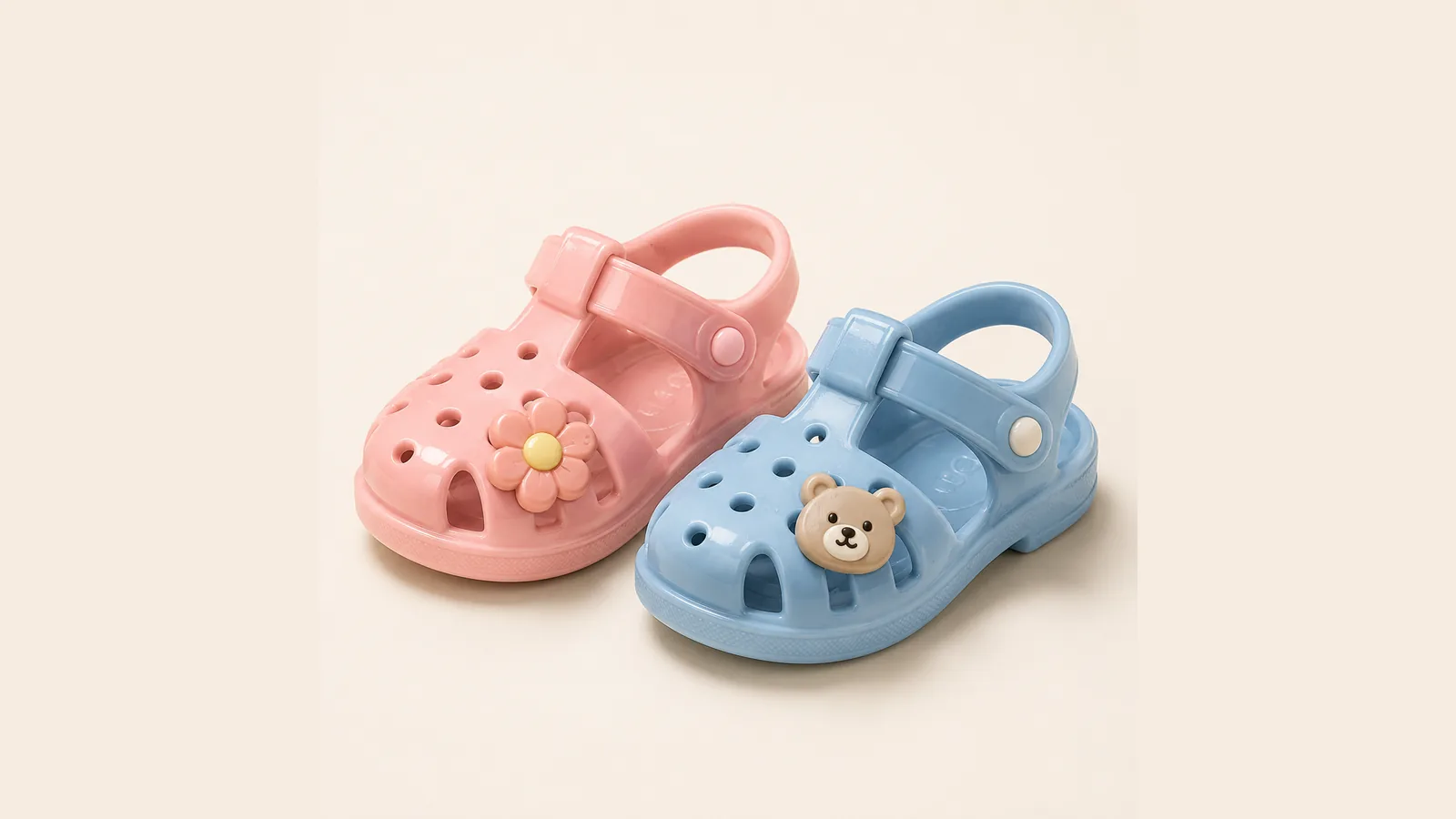
The Seoul Metropolitan Government tested 21 children's products sold on AliExpress, Temu and SHEIN and found 5 that failed Korea's safety standards. Two children's sandals had phthalate plasticisers (ortho-phthalates) up to 284.6× over the limit, and one shoe contained 8 small parts banned in products for children under 36 months.1
Phthalates are well-established endocrine disruptors, and growing children are the most vulnerable. The issue isn't just these two pairs of sandals — it's that many cheap, cross-border kids' shoes and clothes never pass through local safety certification at all. No need to panic, but it's worth a few extra checks when you buy soft-plastic kids' shoes, sandals and slippers.
What are phthalates, and why are children hit hardest?
Phthalates (chemically, ortho-phthalate esters) are chemicals added to plastic to make it soft, flexible and stretchy. Soft PVC, imitation leather, shoe soles, decorative trims, sandal straps — many of them rely on phthalates. Several of the most common ones — DEHP, DBP, BBP — are classified as endocrine disruptors that may interfere with the hormone system and reproductive development.2
Why children in particular? Three reasons:
- Phthalates aren't "locked" into the plastic: they leach out of the product over time and enter the body through skin contact, sweat, and even mouthing. Kids in sandals are often barefoot, sweaty, and touching or mouthing things as they play — more exposure routes than adults.
- Higher intake relative to body weight: children are small, but their contact surface and activity aren't — so per kilogram of body weight, their exposure tends to be higher than an adult's.
- Critical developmental windows: the hormone system is especially sensitive in infancy and before puberty, and disruption during these windows can have longer-lasting consequences.3
That's exactly why the EU, the US and Korea all cap several phthalates in children's products and toys at 0.1%.4 "284× over the limit" means the measured level reached more than two hundred times that legal ceiling.
What exactly did Seoul find?
With summer demand for children's footwear rising, Seoul city tested 21 children's products across the three big cross-border platforms (AliExpress, Temu, SHEIN). Five failed:1
- Two children's sandals — phthalates in the main material, decorative parts and insole leather, up to 284.6× over the Korean limit;
- One shoe contained 8 small parts, which are prohibited in products for children under 36 months (swallowing and choking risk);
- The remaining failures included a bubble toy and a hat.
Seoul has asked the platforms to stop selling the non-compliant items. This is one round of the city's ongoing "overseas direct-purchase safety inspection" programme — it tests a batch of imported direct-buy goods almost every week and publishes the results, and has previously flagged children's winter jackets with phthalates hundreds of times over the limit.5
Why are cheap, cross-border kids' shoes especially risky?
It's not that "cheap always means unsafe" — it's that cross-border direct purchase has a structural gap. Goods shipped straight to you from an overseas seller on AliExpress, Temu or SHEIN often never go through the destination country's safety certification or spot-checks. Children's products sold in physical shops or local retail channels usually have to meet mandatory local standards (EU CE, Korea KC, US CPSC rules, and so on) — but a pair of sandals mailed from an overseas warehouse to your door may never have been checked by anyone.
On top of that, kids' shoes and sandals lean heavily on soft PVC, glossy trims and imitation-leather insoles — precisely where phthalates are used most. The lower the price is squeezed, the higher the chance of recycled or low-grade soft plastic.
What does this mean for health?
Phthalates aren't an "eat-it-and-collapse" poison — the concern is long-term, low-dose, cumulative exposure. International attention to DEHP and related phthalates centres on their role as endocrine disruptors that may affect hormone balance and reproductive development, with supporting evidence from animal studies.2 The American Academy of Pediatrics has also flagged phthalates, among other chemical classes, as a health concern for children and advised minimising exposure.3
So the goal isn't "zero exposure" (not realistic) — it's cutting the unnecessary, avoidable high-exposure sources. A pair of sandals more than two hundred times over the limit is exactly one of the avoidable ones.
What can parents do when buying kids' shoes and sandals?
- Check your home: if you recently bought children's sandals or slippers on AliExpress/Temu/SHEIN — especially very soft, glossy ones with a strong "plastic" smell — consider retiring them, or at least don't let kids wear them barefoot all day or put them near their mouths.
- "Smell, feel, check the label": a sharp plastic odour, overly soft or sticky material, and a rock-bottom price with no safety marking at all (CE / KC / CPSC / a test report) are red flags.
- Buy through certified channels: local retail, named brands, and products stating compliance with children's safety standards (e.g. "phthalate-free", or tested for heavy metals and plasticisers) add a layer of vetting.
- Rotate materials, cut skin-contact soft plastic: for sandals and slippers, look at natural rubber, EVA, fabric uppers or genuine leather; avoid unknown soft PVC for insoles that sit against sweaty feet all day.
- The younger the child, the more caution: under-3s love mouthing things, so beyond phthalates watch for small parts and decorative buckles (a choking risk) — one shoe in this batch failed for exactly that.
The bottom line
Phthalates are hard to avoid entirely in daily life — but "two hundred times over the limit" isn't a background level, it's a risk you can choose to skip. The real problem with cheap cross-border kids' shoes isn't that they're "definitely toxic" — it's that "no one checked them for you." What parents can do is look, smell and buy through channels that vet — and skip most of the unnecessary exposure for their kids.
Sources
-
Seoul Metropolitan Government (서울특별시). (June 2026). Safety inspection results for children's products bought via overseas direct purchase (AliExpress / Temu / SHEIN). Seoul city press releases. https://www.seoul.go.kr/news/news_report.do ↩↩
-
European Chemicals Agency (ECHA). Phthalates — hot topic (DEHP, DBP, BBP, DIBP restricted to 0.1% in plasticised material of articles, REACH Annex XVII Entry 51). https://echa.europa.eu/hot-topics/phthalates ↩↩
-
Trasande, L., Shaffer, R. M., Sathyanarayana, S., & AAP Council on Environmental Health. (2018). Food Additives and Child Health. Pediatrics, 142(2), e20181408. https://doi.org/10.1542/peds.2018-1408 ↩↩
-
U.S. Consumer Product Safety Commission (CPSC). Phthalates — prohibition of children's toys and child care articles containing specified phthalates (limit 0.1%). https://www.cpsc.gov/Business--Manufacturing/Business-Education/Business-Guidance/Phthalates-Information
-
Newspim. (29 June 2026). Some children's products bought via overseas direct purchase exceed the phthalate-plasticiser limit by up to 285× (Korean media report on the Seoul city inspection). https://www.newspim.com/news/view/20260629001383
One food-safety email a month
The month's most important food-safety news, product recalls, and the list a dad actually buys from. Free, and we won't sell your email.